









No- and Low-Alcohol Beverages: When to Move from 0.45 µm to 0.2 µm Membrane Filtration
October 6, 2026
Taking alcohol out of a beer, wine or cider changes more than the flavour. It also removes one of the things that keeps the product microbially stable. A 0.45 µm final membrane that worked well for the full-strength product may not give enough protection once most of the alcohol has gone.
So the question for no- and low-alcohol producers is simple: does your current membrane still hold back the microorganisms that can now grow in your product? For some products it will. For others, a 0.2 µm membrane is the better fit.
Why Does Removing Alcohol Change the Filtration Requirement?
Alcohol helps keep beer, wine and cider stable. Together with low pH, carbonation, preservatives and cold storage, it makes the product a harder place for microorganisms to grow. Take most of the alcohol out and that protection drops, so the rest of the process has to do more of the work. Final membrane filtration is often a big part of that.
This is not just theory. When non-alcoholic beer was put to the test, bacteria such as E. coli and Salmonella were able to survive and even grow once the alcohol was gone, especially when the beer was not kept cold. The researchers suggested producers consider sterile filtration as an extra safeguard. Dealcoholised red wine tells a similar story: without ethanol, microorganisms grew more easily, even with sulphur dioxide (SO₂) in the wine.
That does not mean every no- or low-alcohol product needs a 0.2 µm membrane. It does mean the filtration setup used for the full-strength product should be checked, not copied across.
What Is the Difference Between 0.45 µm and 0.2 µm Membranes?
The µm (micron) figure is a rating, not an exact measure of every pore. What really matters is how well the membrane holds back the specific organisms you are worried about. This is measured as a log reduction value (LRV).
An LRV shows how much a membrane reduces the number of a given organism. An LRV of 7, for example, means the count was cut by a factor of 10 million. Because microorganisms can squeeze through openings smaller than their usual size, a good membrane datasheet lists LRVs for several test organisms.
Published data for one of the beverage membranes in BHF’s range shows why this matters (see what LRVs mean for 0.2 µm and 0.45 µm membranes):
- Escherichia coli: greater than 9 LRV at both 0.2 µm and 0.45 µm
- Lactobacillus brevis, a common beer and wine spoilage bacterium: greater than 9 LRV at both grades
- Saccharomyces cerevisiae (yeast): greater than 7 LRV at both grades
- Brevundimonas diminuta, a small bacterium used to test sterilising-grade membranes: 6 LRV at 0.2 µm, with no result listed for 0.45 µm
For the yeast and spoilage bacteria tested, both grades performed strongly. The difference shows up with smaller bacteria. So the real question is not which membrane is finer, but which organisms your product can now support and which membrane is proven to retain them.
| Consideration | 0.45 µm membrane | 0.2 µm membrane |
| Typical role | Final microbial stabilisation where yeast and larger spoilage bacteria are the main concern | Final filtration where smaller bacteria also need to be retained |
| What the data can show | High LRVs for yeast and common spoilage bacteria such as Lactobacillus brevis, depending on the membrane and its validation data | High LRVs for the same organisms, plus validated retention of smaller challenge bacteria such as Brevundimonas diminuta |
| Flow and throughput | Higher flow for the same filter area and conditions | Lower flow for the same filter area and conditions, so more filter area may be needed |
| Pre-filtration demand | Relies on pre-filtration to reach its expected filter life | More sensitive to particles and colloids, so upstream protection matters more |
| When to review it | The product has lost alcohol or another hurdle and the target organisms have changed | Validation data, throughput and filter life have been checked against the actual product |
General comparison only. Retention, flow and filter life depend on the specific membrane and the product being filtered.
When Should Producers Consider Moving to 0.2 µm?
Consider 0.2 µm when your no- or low-alcohol product can support bacteria that your current 0.45 µm membrane is not validated to retain, and nothing else in the process, such as pasteurisation, controls them.
The answer depends on the product. The main things to look at are:
- Final ABV (alcohol by volume). A product below 0.5% ABV has lost more of its alcohol protection than one at 1% or 3%. In Australia and New Zealand, only products at 1.15% ABV or less can be labelled “low alcohol”.
- pH and residual sugar. Higher pH and leftover sugar can make it easier for microorganisms to grow.
- Target organisms. The spoilage organisms and pathogens relevant to your ingredients, site and past quality issues.
- Other controls. Preservatives, SO₂, DMDC (Velcorin) dosing, carbonation and heat treatment all change how much the final membrane has to do.
- Storage and shelf life. Products kept at room temperature or given a long shelf life carry more risk than those kept cold.
- Filling and packaging. The membrane only protects the product if everything after it is kept hygienic.
What If You Already Use Velcorin (DMDC)?
Some no- and low-alcohol producers dose dimethyl dicarbonate (DMDC), sold as Velcorin, just before filling. It is natural to ask whether that makes a 0.2 µm membrane unnecessary. In most cases, it does not.
DMDC works best against yeast and mould. It is less reliable against bacteria, and bacteria are often the main concern once the alcohol has gone. DMDC also breaks down within a few hours of dosing, so it gives no lasting protection, and it is designed to deal with a low microbial load rather than clean up a heavily contaminated product. In practice, DMDC and the final membrane do different jobs: DMDC helps control yeast that gets in after the filter, while the membrane holds back bacteria. Where smaller bacteria are a risk, a validated 0.2 µm membrane is still needed.
For producers who would rather not use DMDC at all, filtration offers another route. DMDC must be handled with care and dosed through dedicated metering equipment, which adds cost and complexity. A well-designed 0.2 µm filtration setup, followed by a hygienic filling line, can deliver microbial stability without a chemical dosing step.
What Changes in the Process When You Move to 0.2 µm?
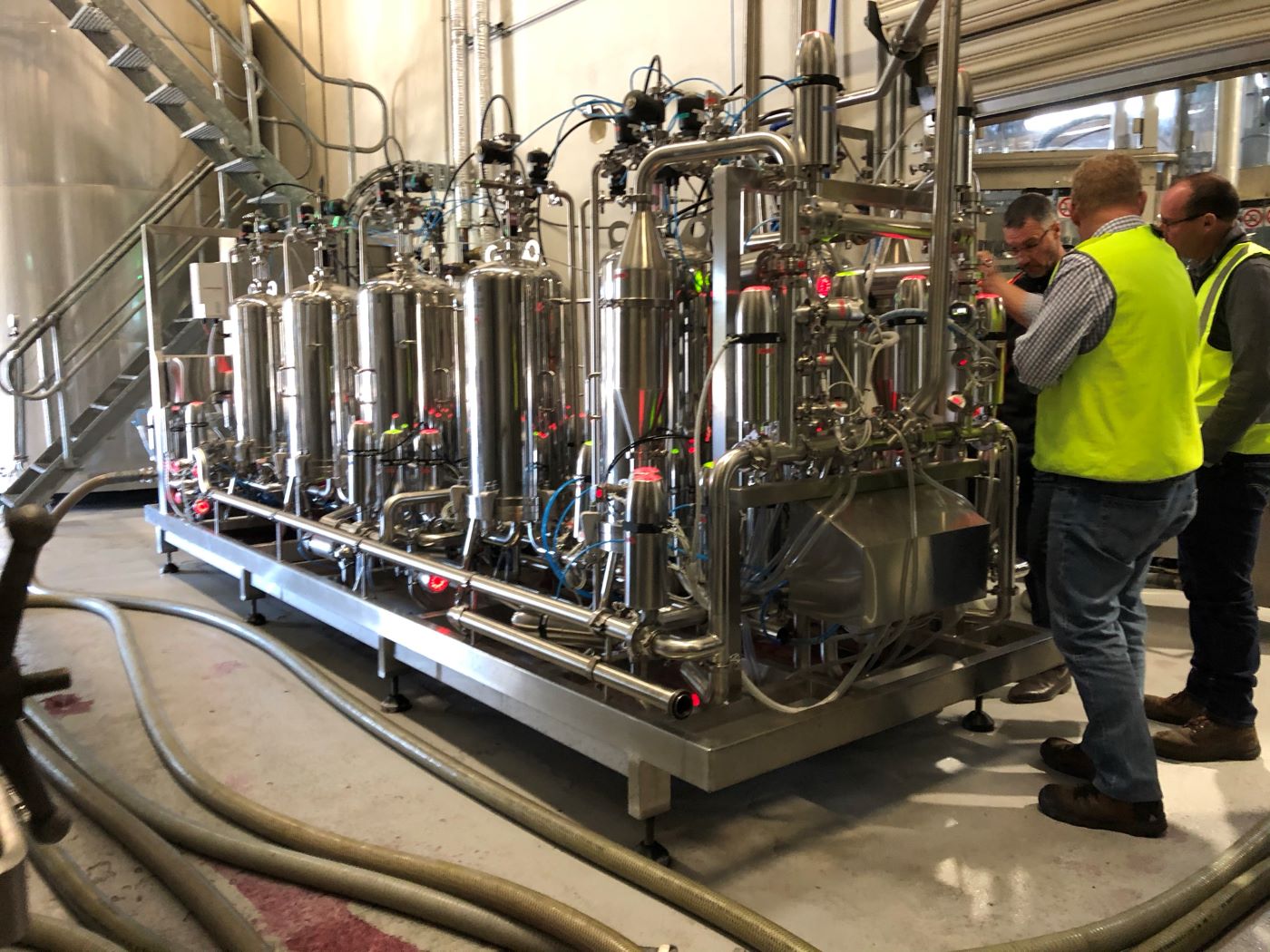
A tighter membrane blocks faster if the same amount of material reaches it. Moving to 0.2 µm usually means reviewing your pre-filtration as well as the final filter.
Before changing the rating, check:
- Filterability. How much particulate and colloidal material your product carries.
- Pre-filtration. Whether your current upstream stages will protect a 0.2 µm membrane well enough.
- Throughput. Whether you can still reach the volume and flow rate you need with the available filter area.
- Filter life and cost. How often the tighter membrane will need changing, and what that costs.
- Validation and integrity testing. Whether there is retention data for the organisms you are concerned about, and whether the membrane can be integrity tested on site.
Ashleigh Seymour, our Account Manager for South Australia and a winemaker herself, tells us what she often sees when producers move into no- and low-alcohol products:
“When a producer takes the alcohol out, the first instinct is often to go straight to a 0.2 µm membrane. That can be the right move, but if the pre-filtration stays the same, the new membrane can block much sooner than expected. We start by looking at what the product now needs protecting from, then check the whole filtration setup so the final membrane does its job and still gets a sensible filter life.”
BHF Membrane Options for No- and Low-Alcohol Production
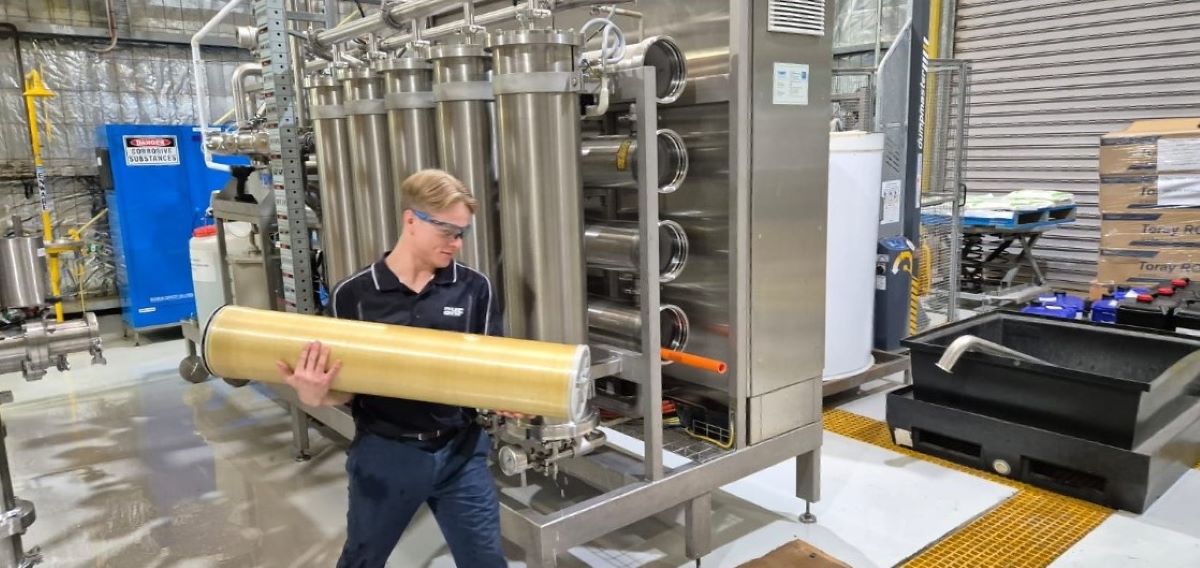
BHF supplies membrane and pre-filtration products for non-alcoholic beverage filtration. Our beverage membrane range includes BEVPOR PH, BEVPOR PS and SupaPore VPWS, with 0.2 µm and 0.45 µm grades among the available ratings.
BEVPOR PH is a beverage membrane cartridge with a polyethersulfone (PES) membrane and a built-in prefilter layer. It comes in ratings from 0.2 µm to 1.2 µm and can be integrity tested repeatedly. It also has low adsorption of protein, colour and flavour components, which helps no- and low-alcohol producers who are already working hard to hold flavour and body after alcohol removal.
Should You Change from 0.45 µm to 0.2 µm?
Only if your product needs it. Removing alcohol changes the microbial risk, so your existing 0.45 µm setup should be reviewed against the organisms the new product can support. If a validated 0.45 µm membrane still covers them, it may stay the right choice. If smaller bacteria are a risk and nothing else in the process controls them, a validated 0.2 µm membrane with the right pre-filtration is the safer option.
Talk to Us
If you are developing or reviewing a no- or low-alcohol beverage process, contact our team at BHF to discuss your current filtration setup and the right membrane and pre-filtration for your product.
Frequently Asked Questions
Not automatically. A 0.2 µm membrane removes microorganisms from the product as it passes through, but it does not protect the product from contamination after the filter, such as at the filler. Whether filtration can be the main control, or should sit alongside pasteurisation, depends on the product, its risks and your food safety plan.
Not usually. DMDC is most effective against yeast and mould and less reliable against bacteria, so it works alongside final membrane filtration rather than replacing it. Where bacteria are a risk in your product, a validated 0.2 µm membrane is still the safer choice.
Yes. A 0.45 µm membrane placed upstream can take some of the load off the 0.2 µm final filter and help extend its life. It adds another stage to the process, so flow rate and cost need to be checked as well.
Integrity testing. These are non-destructive tests, such as bubble point or diffusion tests, that confirm the membrane is intact and performing as it should. Running them regularly gives confidence the final filter is still protecting the product between change-outs.