



What Is a Coalescer Filter and How Does It Work?
October 7, 2026
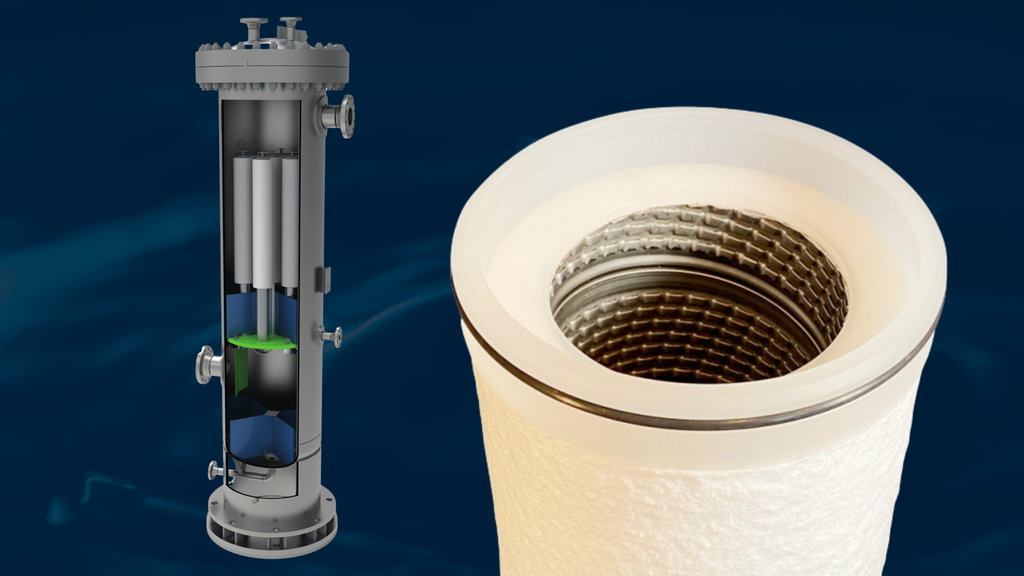
A coalescer filter is designed primarily to separate fine, dispersed liquid droplets, such as oil or water aerosols, from a gas or another liquid. It captures the droplets, encourages them to combine into larger droplets, then drains the separated liquid away from the process stream.
This makes coalescing filtration useful wherever fine oil, water or other liquid contamination could otherwise remain suspended and continue downstream, affecting equipment or the next stage of a process.
How Does a Coalescer Filter Work?
Small droplets are difficult to separate from a moving process stream, so a coalescer first brings them together. As the contaminated stream passes through specialised media, fine liquid droplets contact the fibres and are retained long enough to combine with other droplets. This process, known as coalescence, progressively forms larger droplets that separate more readily from the surrounding fluid.
The process happens in three stages:
- Capture: droplets are intercepted by the coalescing media.
- Coalescence: captured droplets combine into larger droplets.
- Drainage and separation: larger droplets move away from the media and leave the stream.
Capture is only part of the job: if the coalesced liquid cannot drain properly, it can accumulate or become re-entrained into the stream.
What Does a Coalescer Filter Remove?
Depending on the application, coalescers remove:
- fine oil aerosols, water droplets and moisture
- lubrication oil and liquid carried within process gas
- hydrocarbon liquids and immiscible liquids such as oil and water
Separating oil or water aerosols from a gas stream needs a different equipment configuration from separating two liquids, which leads to the two main categories of coalescing filtration: liquid-gas and liquid-liquid separation.
Liquid-Gas vs Liquid-Liquid Coalescers
Liquid-Gas Coalescers
Liquid-gas coalescers remove liquid contamination from gas streams, such as oil and water aerosols from compressed air, the same broad function described in the CAGI Compressed Air Purity Guide.
BHF’s SupaSep LGP is designed specifically for liquid-gas separation, combining pleated glass microfibre coalescing media, a patented meltblown drainage layer, inter-pleat microfibres for faster drainage, and oleophilic drainage materials that help prevent collected liquid beading and re-entering the gas stream.
SupaSep LGP is rated at 99.99% efficiency with typically below 3 ppbw remaining oil downstream, based on modified CAGI-400 testing, figures confirmed in the manufacturer’s technical datasheet published by BHF (Amazon Filters / BHF Technologies). CAGI/ADF-400 is the Compressed Air and Gas Institute’s original coalescing filter test standard, now largely superseded by ISO 12500-1 internationally, though manufacturers may still reference CAGI-based or modified protocols.
Liquid-Liquid Coalescers
Liquid-liquid coalescers apply the same principle to two liquids that do not readily mix, such as oil and water. Small droplets of one liquid are dispersed through the other, and the coalescer encourages them to combine until large enough to separate. Performance depends on factors such as pore size and interfacial tension between the two liquids.
Where Are Coalescer Filters Used?
Coalescing filtration protects a range of industrial processes, including:
- Oil and gas processing: compressor and turbine protection.
- Compressed air and process gas systems: a finer separation stage ahead of downstream equipment.
- Gas sweetening and dehydration: controlling liquid carry-over in amine or glycol systems.
- Membrane systems: protecting membranes from liquid aerosol contamination.
- Biogas processing: gas clean-up before compression.
- Industrial liquid treatment: separating immiscible liquids such as oil and water.
Coalescer Filter vs Standard Particulate Filter
A coalescer and a conventional particulate filter may sit within the same system but perform different functions.
| Filtration type | Primary function | Typical contamination |
| Particulate filter | Captures solid particles | Dirt, rust, scale and other solids |
| Liquid-gas coalescer | Separates liquid droplets from gas | Oil aerosols, water droplets and entrained liquids |
| Liquid-liquid coalescer | Separates dispersed droplets of one liquid from another | Oil in water, or water in oil |
A particulate filter mainly retains solids. A coalescer goes further: it captures fine liquid droplets, combines them, and lets the resulting liquid drain away. A process with both solids and liquid contamination may need multiple filtration stages.
What Affects Coalescer Filter Performance?
Because coalescing depends on both droplet capture and effective drainage, performance is influenced by:
- Contaminant type and droplet size: different liquids and droplet loadings behave differently in the media.
- Flow rate and gas velocity: influence how droplets move through the media and how well liquid drains.
- Operating pressure and temperature: the element, seals and housing must suit the system’s range.
- Pressure drop: weighed against separation efficiency and service life.
- Material compatibility and drainage requirements: media and housing must suit the process fluid, with a clear path for separated liquid to leave the system.
These variables interact, so coalescer selection should be based on the system’s expected operating range rather than a single design condition.
How to Select the Right Coalescer Filter
Selecting a coalescer starts with whether the duty is liquid-gas or liquid-liquid, followed by the contamination type and amount, flow rate, pressure, temperature, required separation efficiency, acceptable pressure drop, material compatibility and drainage requirements.
As Stuart Thomson, BHF’s Associate Director, explains:
“With coalescing filtration, capturing the aerosol is only part of the job. The separated liquid also needs a clear path to drain so it does not build up or re-enter the gas stream. That is why we look at the coalescing media, drainage design, gas flow, liquid loading and pressure drop together when selecting a system. The right combination helps maintain separation performance across the actual operating conditions.”
Choosing a coalescer that matches the process helps support consistent separation while reducing avoidable pressure loss, liquid carry-over and maintenance demands.
Talk to Our Team
Effective coalescing filtration starts with understanding the process. BHF can review your requirements and help determine a suitable approach.
Contact our BHF team to discuss your process conditions and filtration needs.
Frequently Asked Questions
It separates fine dispersed liquid from another fluid by capturing droplets, combining them, and letting the liquid drain away.
A standard particulate filter captures solids such as dirt or rust. A coalescer targets dispersed liquid and must both capture and drain it.
A liquid-gas coalescer removes liquid droplets from a gas stream; a liquid-liquid coalescer separates droplets of one liquid dispersed within another.
Coalescence creates larger droplets, but they still need to leave the media. Effective drainage prevents accumulation and re-entrainment into the process stream.
Contaminant type, droplet size, flow rate, operating pressure and temperature, pressure drop, material compatibility and drainage conditions, assessed together.